Metal roofing
Metal roofing across Central Texas.
Standing seam and exposed fastener panel systems for homes, churches, barns, and commercial buildings. The panel is the easy part. The trim, transitions, and penetration details are what make it last.
Panel types
Two very different things get called a metal roof.
When someone calls about metal, the first job is finding out which system they actually have in mind, because the price gap between them is large and so is the service life.
Exposed fastener panels
R-panel, U-panel, and 5V are screwed straight through the face of the metal into purlins or decking, with a neoprene washer under each screw head to seal the hole. They are economical, they go on quickly, and they are the right answer on barns, shops, agricultural buildings, and plenty of budget-conscious roofs. The tradeoff is that a panel like this has a few thousand holes in it. The washers are the weak point. UV and thermal cycling harden them, screws back out slightly as the panel expands and contracts, and eventually the roof needs a fastener service pass. Plan on that instead of being surprised by it.
Standing seam
Standing seam hides the fastener. Panels attach with concealed clips and the seams are either mechanically seamed or snapped together, so nothing penetrates the water plane in the field of the roof. Just as important, a clip system lets the panel slide as it grows and shrinks with temperature. Central Texas swings a long way between a January night and an August afternoon, and a long metal panel that is pinned at both ends will fight that movement until something distorts or a fastener elongates its hole. Standing seam costs more and it is the system to use when you want to stop thinking about the roof.
Gauge, coating, and the parts that decide longevity
Steel panel is sold by gauge, and lower numbers mean thicker metal. Twenty-six gauge is common and adequate on many buildings. Twenty-four gauge is stiffer, dents less, oil cans less, and is worth the upcharge on a visible residential roof or anywhere hail is a concern. The coating matters just as much. An economy paint system will chalk and fade noticeably under years of intense Texas UV, while a premium PVDF-type finish holds its color far longer. Two bids on the same building can differ by a wide margin purely on gauge and finish, so it belongs on the written scope.
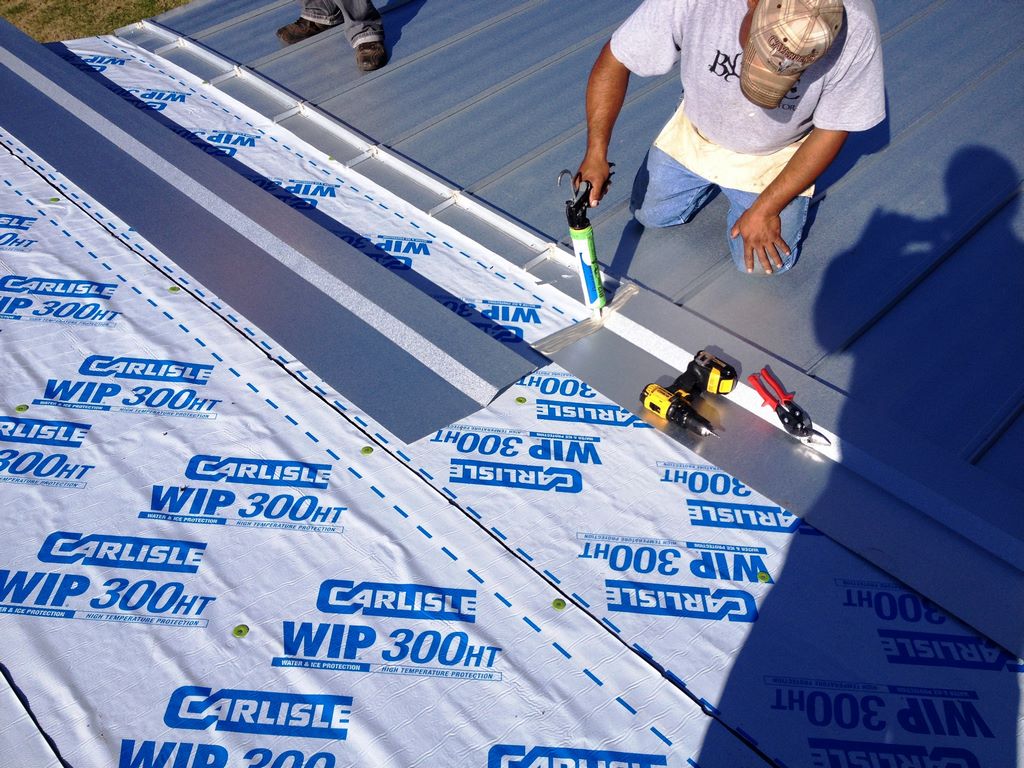
Underneath, metal needs the right underlayment. Metal gets hot, and standard felt is not the right choice under it. A synthetic or high-temperature self-adhering underlayment is the correct call, and on unconditioned buildings a condensation control layer is worth discussing, because bare metal in a humid, unvented building will sweat on the underside and drip in ways that get blamed on a leak.
Trim, transitions, and penetrations
This is where metal roofs actually fail. Ridge caps, hip transitions, eave and rake trim, sidewall and headwall flashings, valley pans, and the boots around plumbing vents and flues do the real waterproofing. A panel run is straightforward work. A valley where two different pitches meet, or a metal roof dying into a masonry wall, is where experience shows. Caulk is a finishing detail, never the waterproofing. If a roof depends on sealant to keep water out, it has a maintenance schedule whether anyone told you or not.
Where metal makes sense, and where it does not
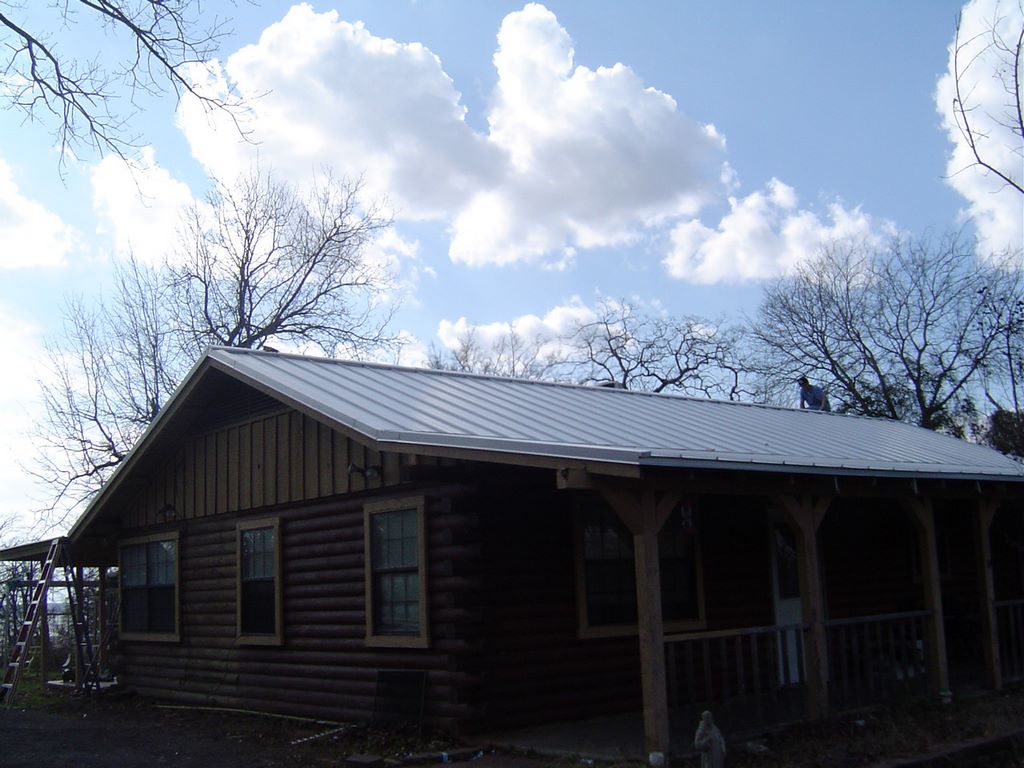
Metal is a strong fit on low-slope porch roofs and additions where shingles are marginal, on steep architectural roofs and churches where the look is part of the building, on large simple roof planes like the commercial project shown here, and on any building where a long service life is worth paying for up front. It is a weaker fit when the budget is tight and the roof is complex, because complexity is what drives metal labor. A cut-up roof with a dozen valleys and penetrations can cost more in trim and flashing labor than the panel itself.
- Ask what gauge and what finish are in the bid. If it does not say, it is not committed.
- Ask whether the system is clip-fastened or screwed through the face, and whether it is designed for thermal movement.
- Ask how valleys, wall transitions, and pipe penetrations are flashed, not just what color the panel is.
A Classic Roofing has installed metal across Killeen, Harker Heights, Belton, Temple, and Salado for more than thirty years, on everything from residential porches to large commercial roof systems. Call 254-702-7479 and we will walk the building, talk through which system fits, and put it in writing.
Large panel work
Big roof planes reward getting the layout right.
On a large metal roof, an error of a quarter inch at the eave becomes a visible problem by the ridge. Panel layout, squaring the roof before the first run, and planning the trim sequence are what separate a metal roof that looks straight from one that does not.
- Panel layout planned before the first sheet is set
- Clip systems that allow for thermal movement
- Flashed valleys, transitions, and penetrations
- Matching trim, gutters, and downspouts
FAQ
Metal roofing questions worth asking.
Is a metal roof loud when it rains?
Not on a house. The noise people remember comes from metal fastened to open purlins over a barn with nothing underneath it. Over solid decking, underlayment, an attic, and insulation, a metal roof sounds about the same inside as a shingle roof.
What is the difference between standing seam and exposed fastener panels?
Standing seam hides the fasteners under the seam and lets the panel move as it expands and contracts, which is why it lasts longer and costs more. Exposed fastener panels screw straight through the face of the metal into the structure. They cost less and go on faster, and the rubber washers under those screws are the part that eventually needs attention.
Does hail ruin a metal roof?
Hail can dent metal without breaking it. Dents in the flat of a panel are usually cosmetic and the roof keeps doing its job. Damage that matters is a punctured panel, a seam or clip that has been knocked loose, or crushed trim and flashing. Whether a carrier pays for cosmetic denting depends on the policy, since many now exclude it.
How long does a metal roof last in Texas heat?
The metal itself outlasts the finish. Several decades of service is realistic when the panel gauge, the coating, and the details are right. What shortens that is thin panel, an economy paint system that chalks and fades under intense UV, or trim and penetration details sealed with caulk instead of being flashed properly.
Can metal go over an existing shingle roof?
It is done, usually over a batten or hat channel system, and it is not the approach we prefer on a residential roof. Going over shingles means nobody looks at the decking, and the decking is the part that fails quietly. On most homes the old roof comes off first.
Why does a new metal roof look slightly wavy?
That is oil canning, a visible waviness in the flat part of a panel. It is an appearance characteristic of light gauge flat metal, not a defect or a leak. Heavier gauge panel, striations or a pencil rib in the flat, and a flat substrate all reduce it, and it shows up most in low-angle light on dark colors.
Will a metal roof lower my cooling bill?
It can help. A reflective coated panel sheds a lot of the solar load that a dark shingle absorbs, which matters through a Central Texas summer. Attic ventilation and insulation still do more of the work, so the honest answer is that metal is part of the picture and not a replacement for a properly ventilated attic.
Related services
Other work A Classic Roofing handles.
Get a metal roof priced properly.
Free estimates on metal roofing in Killeen and across Central Texas.