

Roof inspections
Roof inspections in Killeen and Central Texas.
A close look at the roof, the flashings, the penetrations, and the attic, followed by a straight answer about what needs doing now, what can wait, and what it costs.
What gets checked
A roof inspection is mostly about the details.
The wide open field of shingles is rarely where a roof fails. It fails at the edges, the transitions, and the holes cut through it, and those are the parts a real inspection spends its time on. Here is what we are actually looking at when we get on your roof.
The field
Granule loss and where it is concentrated, curling or clawing at the shingle edges, tabs that have lost their seal, blistering, hail bruising that has to be felt as much as seen, exposed fasteners, and previous repairs. Old repairs tell you a lot. A roof carrying six different patches of sealant is a roof someone has been chasing rather than diagnosing.
Flashings and transitions
Step flashing where the roof meets a wall, chimney flashing and whether there is real counterflashing let into the masonry or just a smear of caulk, valley condition, headwall and sidewall details, and drip edge at eaves and rakes. These are the highest-value few minutes of any inspection because this is where the majority of leaks originate.
Penetrations
Plumbing vent boots, which split in our sun long before shingles wear out, along with turbines, box and ridge vents, flues, satellite mounts, and anything else somebody has screwed through the roof over the years. Every penetration is a hole that only stays dry because of how it was detailed.
The attic
Skipping the attic means missing half the story. From underneath we look for staining on the decking and rafters, daylight at penetrations, rusted nail shanks that indicate condensation, wet or matted insulation, and whether intake at the soffit and exhaust near the ridge are anywhere close to balanced. Attic ventilation is the quiet killer of shingle roofs in Central Texas, because an attic that cannot breathe cooks the roof from below all summer and takes years off it.
Edges, gutters, and the ground
Fascia and soffit condition, gutter attachment and slope, downspout discharge, and the soft metals around the property. Dented gutters, screens, and vent caps are also the first clue about hail, so the walk around the building is part of the inspection rather than an afterthought.
When it is worth getting one
Annually is a reasonable baseline in this climate, and there are specific moments where an inspection earns its keep. After a storm that brought real hail or hard wind, before you buy a house and while you still have an option period, when the roof passes roughly ten to twelve years old and the details start giving out, before you put solar panels on a roof that may need replacing first, when you are selling and want to head off a buyer surprise, and any time you see a ceiling stain, no matter how small it looks.
This is different from the roof portion of a general home inspection. A home inspector covers an entire house and frequently looks at the roof from a ladder at the eave or from the ground. A roofing inspection gets up close on the details and comes with a specific, priced opinion about what to do.
What you get, and what an inspection cannot tell you
You get the condition, an honest read on how much service life is left, a list separating what needs attention now from what can wait, photographs of anything significant, and a written estimate for the work. If the roof is fine, you will hear that. There is no version of this where you get talked into a roof you do not need, and that is not a slogan, it is how a family-owned company with thirty years in the same towns stays in business.
Be aware of the limits too. No inspection can see decking that is hidden under intact shingles, or find a leak that only happens under wind-driven rain from one particular direction. Some leaks require water testing to reproduce. And an inspection is a snapshot, not a warranty against the next hailstorm.
- Keep the reports. A documented history of roof condition is genuinely useful when an insurance question comes up later.
- Do not wait on a small ceiling stain. Water that has been running for a season stops being a shingle problem and becomes a decking and drywall problem.
- Stay off the roof yourself. Walking a roof damages shingles, and Central Texas heat makes it more dangerous than it looks.
A Classic Roofing inspects homes, churches, and commercial buildings across Killeen, Harker Heights, Copperas Cove, Belton, Temple, Salado, and Fort Cavazos. Call 254-702-7479 to get on the schedule.
Difficult roofs
Steep and complicated roofs need a closer look.
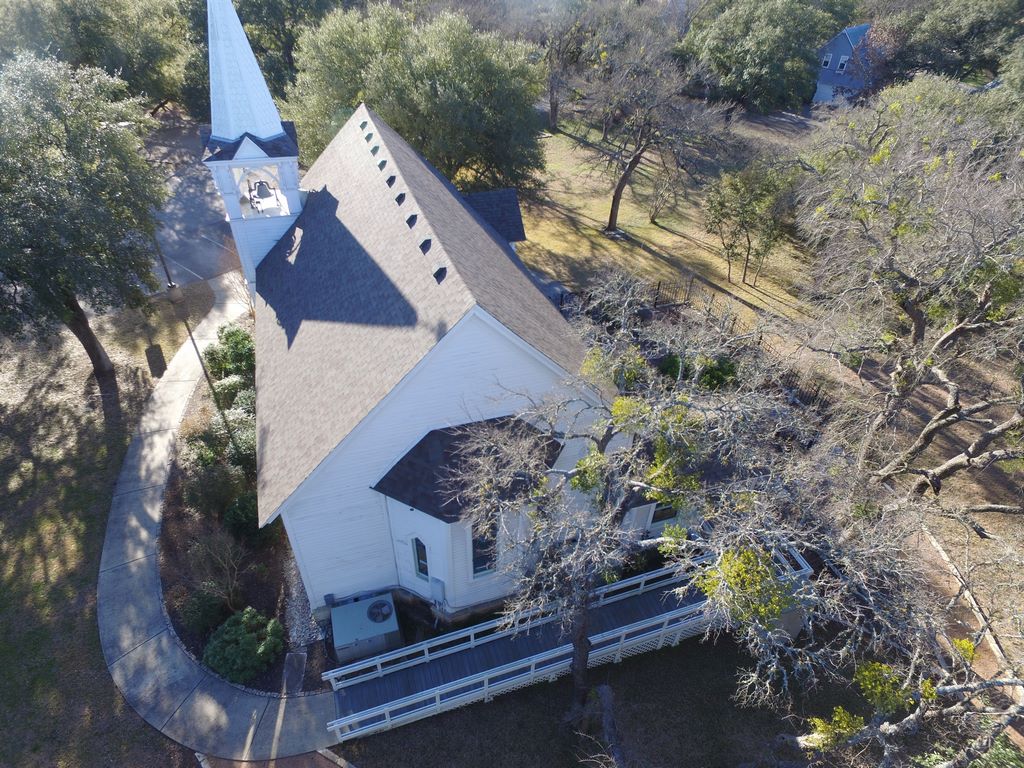
Churches, historic buildings, and homes with steep or cut-up roof lines hide their problems in places nobody checks. Spires, dormers, tower transitions, and long valleys are exactly where water finds its way in, and they are also where a careless inspection does damage of its own.
- Steep and complex roof lines assessed safely
- Valleys, dormers, and tower transitions checked closely
- Findings photographed and explained in plain language
- Written estimate for anything that needs attention
FAQ
Roof inspection questions.
How often should a roof be inspected in Central Texas?
Once a year is a sensible baseline, plus a look after any storm that brought real hail or hard wind. Roofs past about the ten year mark benefit from a closer eye, because that is when sealant, pipe boots, and flashing details start giving out well before the shingles themselves are finished.
How is this different from the roof section of a home inspection?
A general home inspector covers the whole house and often looks at the roof from a ladder at the edge or from the ground. A roofing inspection walks the roof where it is safe to do so, checks flashings and penetrations up close, gets into the attic, and comes with a specific opinion on what it will take to fix what is found.
What do you look at in the attic?
Water staining on the underside of the decking and on rafters, daylight showing through at penetrations, rusted nail shanks that point to condensation, damp or matted insulation, and whether intake and exhaust ventilation are balanced. The attic frequently tells the real story when a roof looks acceptable from above.
Should I get an inspection before filing a hail claim?
It is the sensible order. Knowing what damage is actually up there lets you weigh it against your deductible instead of filing blind. If the damage is real it gets documented with photographs, and if it is minor you have not opened a claim you did not need.
Can you inspect a roof before I buy the house?
Yes, and it is worth doing during the option period. You want to know remaining service life, whether past repairs were done properly, and whether the decking and ventilation are sound before you own it. That information is also useful at the negotiating table.
Do you walk the roof or use a drone?
Whatever gets an accurate answer safely. Most roofs get walked, because hail bruising has to be felt as much as seen and flashing details need a close look. Very steep, fragile, or storm-compromised roofs get inspected from a ladder and by other means rather than risking damage to the roof or to a person.
What will the inspection tell me?
What condition the roof is in, roughly how much service life is left, which specific items need attention now, which can wait, and what the work would cost. If the honest answer is that the roof is fine and you should call again in two years, that is what you will hear.
Related services
Other work A Classic Roofing handles.
Find out what shape the roof is in.
Free estimates and roof inspections across Killeen and Central Texas.