Temple roofing
Roofing in Temple, TX.
The largest city in Bell County has more low-slope roof than anywhere else in the area. Medical offices, warehouses, and retail buildings, alongside older neighborhoods that need a different answer than a subdivision does.
Local conditions
Temple has more flat roof than the rest of Bell County.
Temple grew as a railroad town and then as a medical and industrial center, and the building stock reflects that. Between the hospital and medical office corridor, the clinics and professional buildings that cluster around it, the retail strips along the main commercial roads, and the distribution and light industrial buildings out toward the rail and the interstate, this is a city with a great deal of low-slope roof area. Those are membrane and built-up systems, not shingle roofs, and they need a contractor who treats them as a different trade instead of a bigger version of a house.
Where a low-slope roof actually fails
Almost never in the middle of the field. The failures we get called for in Temple are at the penetrations and the edges: the curbs under rooftop HVAC units, the pipes and conduit that come up through the deck, the drains and scuppers, and the joints in parapet wall coping. Add to that the damage caused by roof traffic, because every service technician who walks a membrane roof to work on a unit leaves marks, and over years that adds up around the equipment. If your building leaks after every rain but the roof looks fine from the parapet, the problem is almost certainly at one of those details.
Ponding is the other thing worth naming. Some low-slope roofs shed slowly by design, but water that is still standing days later usually means a blocked or undersized drain, crushed insulation, or a deck that has deflected. It shortens the life of the membrane and it is exactly where seams open first.
Working around a business that cannot close
A clinic does not stop seeing patients because the roof is being replaced, and a warehouse does not stop shipping. Commercial work in Temple gets planned around that. The roof is sectioned so that whatever is opened during a day is dried in before the crew leaves, entrances and parking stay accessible, and the loudest phases get scheduled where they interfere least. Deliveries and disposal get staged so they are not sitting across a loading dock or a patient entrance. That planning is part of the written scope, not an afterthought.
Older Temple houses and the low-pitch problem
The residential side of Temple has its own quirk. The neighborhoods that grew up around the older core include a lot of mid-century ranch homes with long, shallow roofs, and plenty of those pitches sit right at or below what asphalt shingles are rated for. Those roofs leak repeatedly no matter how many times someone re-shingles them, because the problem is the pitch and not the product. Depending on what we measure, the answer is either a correct low-slope underlayment detail or converting that section to metal. Either way we measure the pitch instead of guessing, and we tell you why the last three repairs did not hold.
Metal on large-format buildings
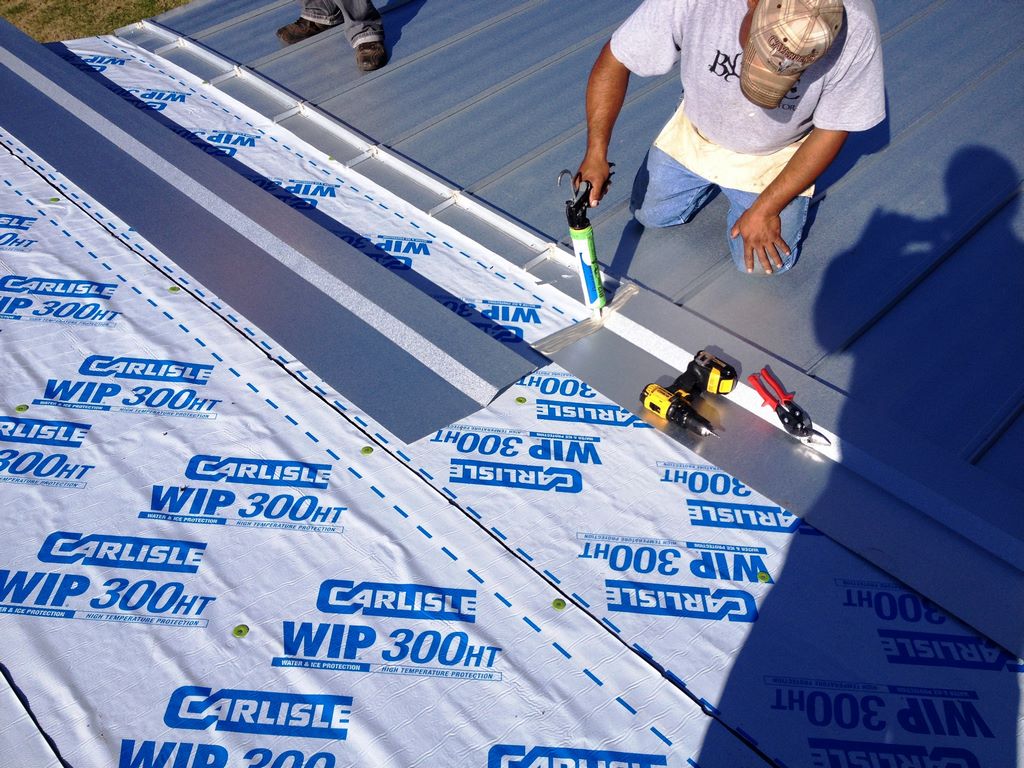
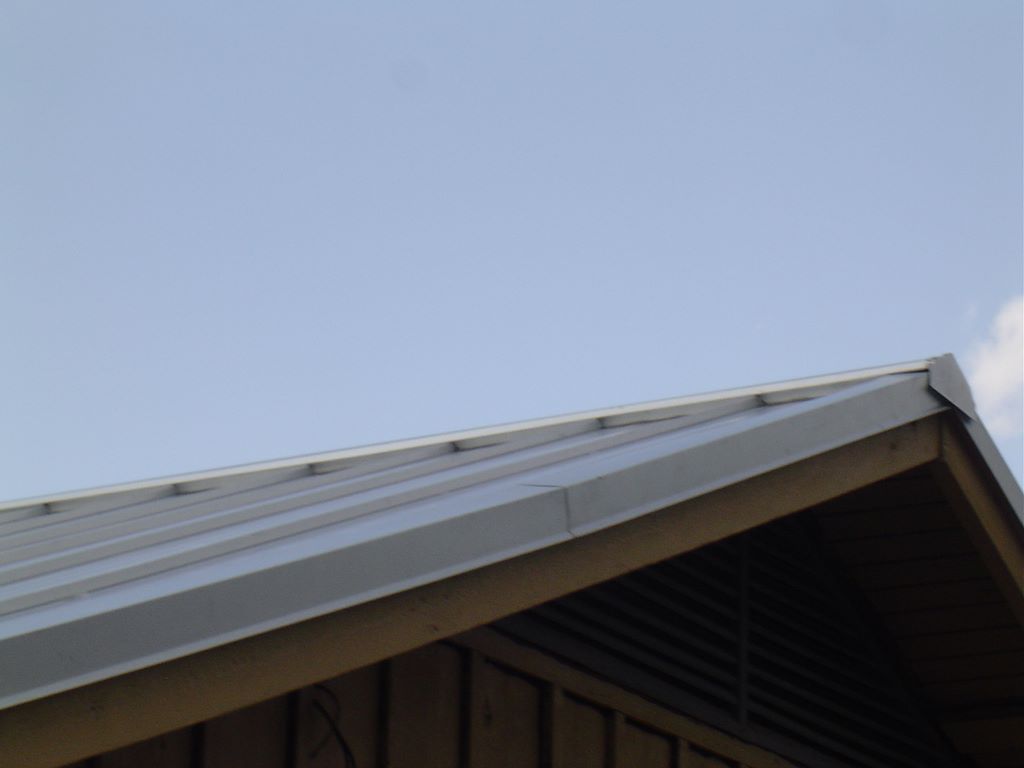
Metal roofing makes sense on a lot of Temple property, particularly larger buildings, shops, and structures where a long service life matters more than the up-front number. The details are what determine whether a metal roof performs: panel terminations, transitions, curb flashings, and how the system handles expansion. That is the part of metal work most of the industry rushes and we do not.
What we handle in Temple
- Low-slope and flat commercial roof repair, restoration, and replacement
- Leak tracing at HVAC curbs, drains, scuppers, and parapet coping
- Metal roofing on commercial buildings, shops, and residential sections
- Residential shingle repair and replacement in older and newer neighborhoods
- Storm damage documentation and written scope for adjusters and managers
- Gutters and downspouts, siding, skylights, and interior repair after leaks
Commercial
Property managers get documentation, not promises.
On a commercial roof the paperwork matters almost as much as the work. Owners, tenants, adjusters, and managers all need to see the same thing, and that starts with photographs and a scope written in plain language.
- Photographed condition report of penetrations, drains, and seams
- Written scope suitable for an adjuster or an owner approval
- Phased scheduling so the building keeps operating
- Coordination with HVAC and other rooftop trades
FAQ
Questions we get from Temple owners and managers.
Do you work on flat and low-slope commercial roofs in Temple?
Yes. Temple carries a lot of low-slope stock: medical offices, clinics, retail strips, and warehouse and distribution buildings. Those are membrane and built-up systems rather than shingle roofs, and they fail in entirely different places than a house does.
Can you reroof our building while we stay open?
That is normal on commercial work here. The roof gets sectioned so every area opened during the day is dried in before crews leave, entrances and parking stay usable, and loud phases can be scheduled around clinic hours or business hours where noise matters.
Water stands on our roof for days after a rain. Is that a problem?
Ponding is worth looking at. Some low-slope roofs drain slowly by design, but water that never clears usually points to a blocked or undersized drain, crushed insulation, or a deflected deck. It shortens the life of the membrane, and standing water is where seams tend to open first.
My older Temple ranch house has a low-pitch roof that keeps leaking. What are the options?
Mid-century ranch homes in the older Temple neighborhoods often sit right at the edge of what asphalt shingles are rated for. Depending on the measured pitch, the answer is either a proper low-slope underlayment detail or converting that section to metal. We measure the actual pitch rather than guess at it.
What usually fails first on a commercial roof?
Almost always a penetration rather than the field. Curbs under rooftop HVAC units, pipe and conduit penetrations, drains and scuppers, and the parapet wall and coping joints. Foot traffic from service technicians working around rooftop equipment does a lot of quiet damage too.
Do you handle the insurance side on a commercial claim?
We document visible damage, provide a written scope you can hand to an adjuster or a property manager, and meet the adjuster on site when that helps. We will not tell you a claim will be approved, because that decision belongs to the carrier.
Related
Other work A Classic Roofing handles.
Get the roof looked at properly.
Free estimates on residential and commercial roofing in Temple and across Central Texas.